A Deficiency-based Medicine Perspective.
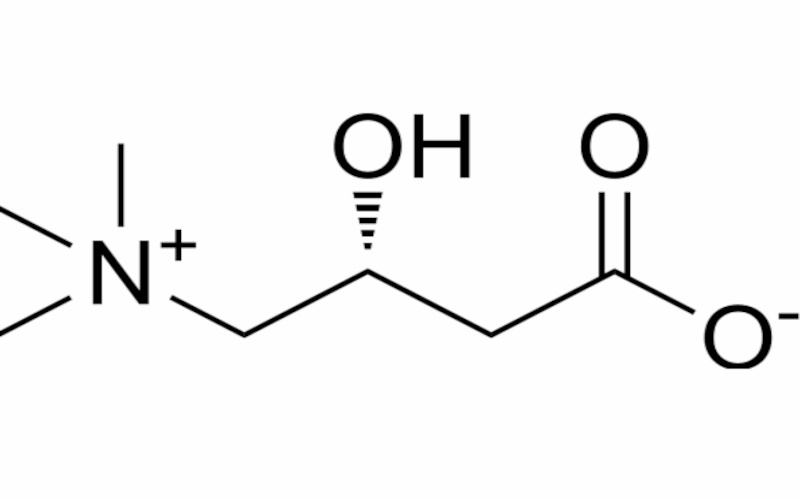
Much of what we see on commercially available organic acid tests shows up as carnitine deficiency. Carnitine is a non-essential amino acid-like substance that is critical to the transport of fatty acids to cellular mitochondria as part of the energy producing process that makes ATP, Adenosine Triphosphate, the primary molecule used by human and animal cells to store and transfer energy. Without carnitine, this process is sluggish or it simply stops, resulting in early cellular death. There are specific direct and indirect markers for carnitine on many available variations of the Organic Acid Test, such as Adipic, Suberic , and Ethylmalonic acids, which also tend to be tied to Riboflavin (Vitamin B2) deficiency.
However, Vitamin C (ascorbic acid) plays a specific and crucial role in carnitine metabolism because it is the main cofactor in two hydroxylase enzymes1 that synthesize carnitine, while also reducing (or “stabilizing”) iron that is needed at the active sites for these enzymes to work properly2. Without Vitamin C, carnitine either doesn’t work right or it simply isn’t produced.
A deficiency of Vitamin CA is the key factor in “carnitine deficiency,” because even with carnitine supplementation, without the presence of substantial amounts of Vitamin C at the cellular level, the available supplementary carnitine will not work properly. The underlying cause of these carnitine “insufficiency” markers being out of balance on Organic Acid Tests, where the subsequent lab recommendation is more carnitine supplementation, is in reality deep Vitamin C deficiency on a cellular level. It isn’t unreasonable to think of these carnitine markers as indirect Vitamin C markers that can be used to identify an increased need for the vitamin.
Vitamin C is also deeply interconnected to mitochondrial energy production, and when impaired, it is believed to be the exact cause of the extreme fatigue and muscle degradation associated with Scurvy3. Correcting cellular Vitamin C deficiency will have a chain reaction effect that allows mitochondria to function properly, resulting in a proper cell life cycle to complete, and reducing the instance of early cell death. Being a potent and pervasive antioxidant, Vitamin C allows mitochondria to “fire hotter” while protecting cells from the oxidative damage that is the result of energy production and therefore allowing for more energy to be produced.
The ironic and tragic part of this is that most Organic Acid “experts” discount the Vitamin C marker (and some even think that ascorbic acid is a fungus marker!4) on the test reports and disregard the down-chain effect of Vitamin C deficiency on such things as neurotransmitter synthesis. Vitamin C becomes the most important nutrient in biochemistry when it is deficient, as is the case for all humans, since humans are incapable of making the substance and have no functional way to store it. Corrective Vitamin C dosing is critical to mitigating mitochondrial disorders, especially those that have underlying carnitine deficiency or function errors. The most updated and current science5 tells us that this notion cannot be denied, and that carnitine synthesis and its very function are hyper dependent on the presence of Ascorbate in cellular mitochondria.
If functional medicine was not so dismissive and complacent about Vitamin C, I am certain we’d get better outcomes if the simple solution of finding the true deficiency was applied. In this, as in many other cases I have explored, Vitamin C deficiency is the cause and the cure. Carnitine issues at their core are the result of Vitamin C deficiency.
1 ε-N-trimethyllysine hydroxylase and γ-butyrobetaine hydroxylase: Ascorbic Acid and Carnitine Biosynthesis https://pubmed.ncbi.nlm.nih.gov/1962562/
2 https://pmc.ncbi.nlm.nih.gov/articles/PMC7918462/
3 https://www.nature.com/scitable/topicpage/the-mystery-of-vitamin-c-14167861/
4 A private conversation between the author and a lab test developer revealed that a more recent Organic Acid Test classified Ascorbic Acid as a fungal marker, meaning that elevations of Vitamin C were an indicator of fungal exposure or invasion, which I pointed out to him was incorrect and would indicate an endogenous source of Vitamin C, of which there is no evidence whatsoever. He did not have any response to this and when I sent him my findings on how Vitamin C rapidly detoxes mold and fungal toxins, I never heard back from him and the lab specifically told me they are not interested at all in anything dealing with Vitamin C.
5 There is a study that disputes that carnitine production is affected at all from Vitamin C; however, this study was done on mice and doesn’t seem to be reproducible while a study done around the same time on guinea pigs, a better test subject than mice, showed significant influence albeit “indirectly” on carnitine production. It is up to the individual to decide which is more valid, and I lean pretty strongly to the guinea pig study, as well as other studies that corroborate the direct and indirect influence of Vitamin C as a cofactor for carnitine synthesis and function. https://pubmed.ncbi.nlm.nih.gov/18758058/ https://www.sciencedirect.com/science/article/abs/pii/S0022316623058005
A “Deficiency” in this case is defined as the demand for the vitamin is not being met by the supply. Even if there is the presence of the vitamin, it may not be in sufficient enough quantities to meet the biological needs at that time for that particular chemical process. Vitamin C has a very short half life and it needs to be constantly replenished through intake to match how mammals make continuous Vitamin C in their livers with constant deliverance into the blood stream.